
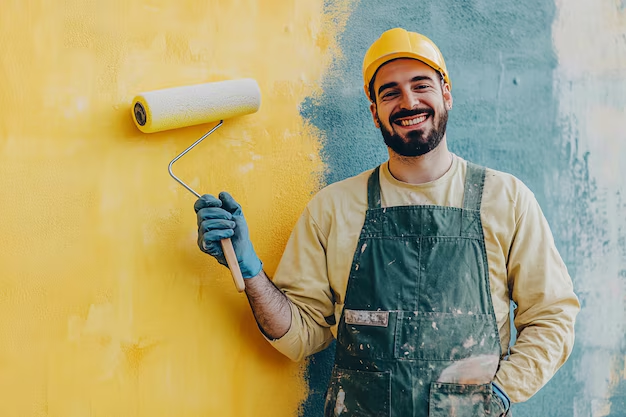
Choose a color and dab it on the wall. Looks beautiful, right? Sure, until it dries. Then, the color suddenly turns light, dark, or some other shade of what you had imagined. Many of us have been there; even Painters in Jacksonville must have realized that paint never looks the same after it rests.
Lack of such knowledge can help avoid such blunders before entering a partnership with someone who allows such full-scale painting to occur.
The Role of Wet vs Dry Paint
Wet paint often looks dark, and brightens up as it dries. This is due to light interacting with the moisture.
The moisture reflects light differently than when it is dried. In a later stage, drying changes the reflection, revealing the true color beneath. This change may be slight or significant, depending on the shade and finish.
Does Lighting Change How Paint Looks?
Lighting is more significant than one would think. Colors can appear vastly dissimilar based on the lighting in the space.
- Natural daylight reveals the most accurate shade of the color
- Warmer lights will tend to make colors appear yellowish or softer
- Colder lights will tend to make colors appear with a blue tinge
As lighting varies throughout the day, a particular shade that appears to be the right choice at one time may no longer suit another.
Paint Finish and Its Effect on Color
Choosing between matte, satin, or gloss finishes will affect a color’s appearance after it dries. For instance, matte finishes are known for absorbing light, while glossy finishes reflect it, altering the way the color appears.
That is why, even when using the same color to paint two separate walls with different finishes, one wall won’t look like the other.
Why Do Multiple Coats Make a Difference?
A single coat represents but a beginning; it is only through the application of multiple coats that paint brings up depth and consistency hidden beneath the new coats.
- One coat may look patchy or uneven
- Two coats provide fuller color coverage
- Additional coats can deepen certain shades
If a paint layer is skipped, the finish may look different, even if the color itself remains accurate.
Surface Conditions Affect the Final Look
Even the condition of your wall is vital in determining how effectively the paint appears. Rough or uneven surfaces can absorb or pick up paint differently on different parts, producing color variation.
This is the reason why preparation is necessary—again, cleaning, sanding, and priming all. House Painters in Jacksonville place great emphasis on surface prep, as it directly affects the final look.
The Influence of Surrounding Colors
Paint does not stand alone. Furniture, floors, and decor could affect how the walls are perceived.
A color that appears perfectly balanced in an empty room can look too warm or too cool when other elements are included. Such a visual relationship causes one to see color in a new light despite no changes made to the actual color itself.
Conclusion: Getting the Color You Actually Want
Differences in paint appearance after drying are not defects but natural outcomes of light effects, textures, and layering. Awareness of these elements enables better decision-making and prevents unwanted surprises.
When planning for your next painting project, you need to work with a reliable Jacksonville Painting Company such as SA Classic Painting. Their team ensures that the right preparations are made, that the painting is done correctly, and, most importantly, shows you what colors actually look like.
An effective paint job not only meets your expectations but also satisfies them for years to come.